If you regularly wake up around 3 am feeling overheated, restless, or suddenly uncomfortable, you're not alone. Many people experience this pattern, even those who fall asleep easily and go to bed feeling fine. The frustrating part is that there's often no obvious reason.
Waking up hot in the early hours is rarely about room temperature at bedtime. More often, it comes down to how your body regulates heat during sleep, and whether your bedding is working with that process or against it.
Understanding what's happening physiologically, and how your bedding choices influence it, is usually enough to fix the problem.
Your body has a built-in temperature cycle
Body temperature follows a daily rhythm. It rises during the day to keep you alert, then gradually drops in the evening as a signal that sleep is approaching.
During the first half of the night, your core temperature continues to fall. This cooling process is what helps you move into deeper, more restorative stages of sleep. But later in the night, typically between 2 am and 4 am, the body begins warming back up as it prepares for waking.
That transition is normal and necessary. The problem is what happens when your bedding doesn't allow that heat to escape.

Body temperature dips in the early night and starts climbing again from around 2–4 am.
Why 3 am is the most common wake-up point
Around 3 am, sleep naturally becomes lighter. At the same time, the body is coming out of its coolest phase and beginning its gradual rise back to waking temperature.
If your bedding traps heat or restricts airflow, that temperature shift becomes exaggerated. The body tries to release warmth, but with nowhere for it to go, the heat builds up close to the skin. The result is that sudden feeling of being too warm, followed by restlessness or the urge to kick off the covers.
Even if you fall back asleep quickly, that disruption fragments your sleep and reduces how rested you feel in the morning.
The role of moisture in overnight comfort
Heat and moisture are closely linked during sleep. As body temperature rises in the early hours, perspiration increases, even if you don't consciously feel sweaty. If your bedding can't absorb and release that moisture efficiently, a humid microclimate builds up around you.
This makes the bed feel warmer than the room itself and slows natural cooling. It's why waking up hot often comes with that clammy, heavy feeling rather than simple dry warmth.
Managing moisture is just as important as managing heat, and the two are largely determined by the same factor: what your bedding is made from.
How fabric choice affects how you sleep
This is where most people are surprised by how much difference it makes.
Synthetic fabrics are common in budget and mid-range bedding because they're inexpensive and wrinkle-resistant. But their fibres don't breathe well, and moisture tends to sit on the surface rather than being absorbed and released into the air. They can feel perfectly comfortable when you first get into bed, especially in cooler weather. The problems show up later, once body heat starts building.
Natural fibres behave differently, and the difference is most noticeable in the second half of the night.
Linen is the most breathable option available in bedding. Its fibres allow air to circulate freely and absorb moisture from the body, releasing it back into the atmosphere rather than trapping it next to your skin. It's also naturally temperature-regulating, which means it responds to changes in body heat rather than holding conditions steady.
Cotton, when well-made and not tightly woven or chemically treated, offers similar benefits. The key is fibre quality and weave. A good cotton sheet supports airflow and moisture movement in a way that cheaper blends simply don't.
The distinction isn't about which fabric feels softer or looks better. It's about how each material interacts with your body throughout the night, especially during that critical window between 2 am and 4 am.

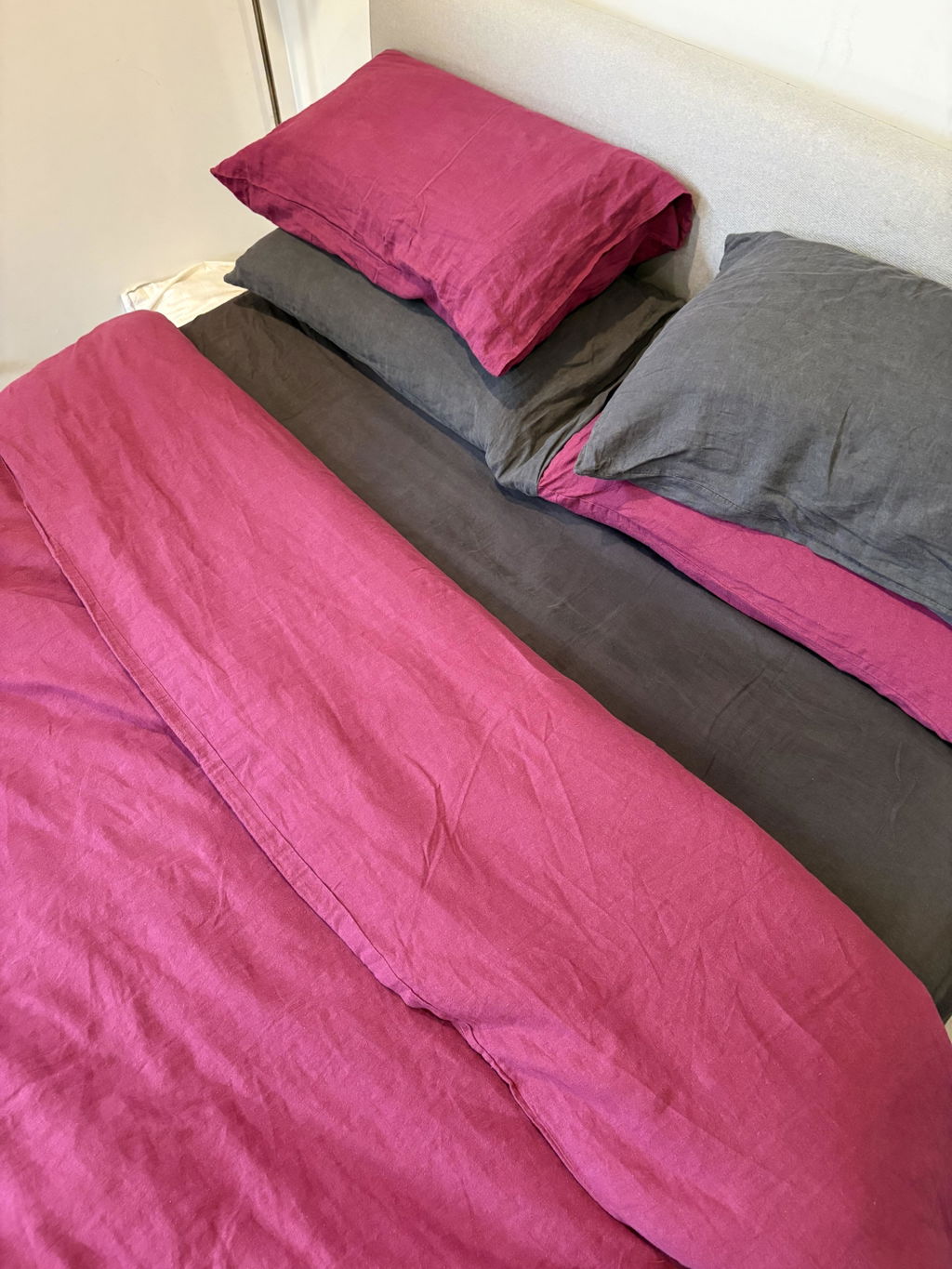
Pure linen is naturally breathable and moisture-wicking, helping your body regulate overnight temperature.
Why switching to a lighter duvet doesn't always solve it
Many people try going to thinner blankets or fewer layers when they start waking up hot. It can help, but it often doesn't fully solve the problem if the fabric itself is the issue.
A lighter synthetic duvet can still trap heat and restrict moisture movement. In contrast, breathable natural fibres can feel noticeably cooler and more comfortable even at a comparable weight. The goal isn't less fabric. It's fabric that works with your body rather than holding heat in.
Other factors that can make it worse
Bedding is usually the biggest variable, but a few other things can amplify the problem.
Poor bedroom ventilation traps warm, humid air that has nowhere to go. Very dry or very humid conditions interfere with the body's natural cooling. Eating heavy meals or drinking alcohol close to bedtime raises overnight body temperature. Stress and disrupted sleep patterns can make temperature shifts feel more abrupt.
Addressing these alongside your bedding choices tends to produce the best results.
Practical steps to stop waking up hot
The good news is that small adjustments usually make a significant difference.
Start with your sheets. If you're sleeping on a synthetic or polyester blend, that's often the first thing to change. Look for sheets made from natural fibres with an open, breathable weave. If you're not sure what you currently have, the feel in the early hours of the morning is a reliable indicator. If they feel clammy or stuffy around 3 am, the fabric is likely the problem.
Think about layering rather than weight. A breathable fitted sheet and pillowcases paired with a lighter outer layer often performs better than a single heavy cover, because you have more flexibility to adjust and more surface area for airflow.
Ventilate your bedroom during the day. Even opening a window for 30 minutes each morning reduces the humidity that builds up overnight and makes a noticeable difference to how the room feels by the time you go to bed.
Pay attention to how your bed feels at 3 am, not just when you first get in. Most people only evaluate their bedding based on how comfortable it is at bedtime, which misses the problem entirely.