There was a time when luxury in the bedroom was defined almost entirely by appearance. High thread counts, smooth finishes, recognisable labels. What something looked like mattered more than what it did, or how long it lasted.
That definition is changing. A growing number of people are reconsidering what they want from everyday objects, and bedding — something you use every night and replace every few years — sits near the centre of that shift. The question has moved from "how does it look?" to "how does it perform, and for how long?"
This isn't a trend in the lifestyle-magazine sense. It's a more fundamental change in what quality means, and in what people are willing to pay for. Sustainable bedding has moved from niche preference to considered choice, and the reasons why are more practical than ideological.
A Different Definition of Luxury
The clearest sign that the definition of luxury is shifting is that excess is no longer the signal it once was. Filling a room with layers, rotating seasonal sets, or replacing bedding every couple of years because it's worn out doesn't read as abundance anymore. It reads as inefficiency.
What's replacing it is intention. Fewer things, chosen more carefully, designed to last. In the bedroom, this plays out most visibly in how people think about fabric. Rather than chasing a thread count number or a brand name on the label, attention has shifted toward fibre quality, breathability, and how a material ages through regular use.
These factors are less visible at the point of purchase, but they have a much greater impact over time. A sheet that feels identical on week one and week one hundred is, in practical terms, a better product than one that starts soft and deteriorates within a year.
The true cost of bedding: what the numbers show
2–3 years
Average lifespan of synthetic bedding under regular weekly washing before comfort declines noticeably
7–10+ years
Expected lifespan of quality linen bedding — softening and improving throughout, rather than deteriorating
3–5×
How many synthetic sets you'd replace over the same period a single quality linen set remains in use
Why Sustainability Has Become Part of the Conversation
Sustainability in bedding is often framed in environmental terms, and those arguments are real. Textile waste is significant, synthetic fibres don't biodegrade efficiently, and the cycle of buying and discarding repeats more often than most people realise. But the more immediate argument is a simpler one: fast bedding costs more over time than it appears to.
A set of synthetic sheets at $60 replaced every two to three years amounts to three or four purchases over a decade. A quality natural fibre set bought once and used comfortably for eight to ten years often costs less in total, and provides a consistently better experience throughout. The case for sustainable bedding doesn't require environmental conviction. It requires basic arithmetic.
The other dimension is comfort. Bedding that degrades quickly changes in ways that are noticeable but hard to articulate. It starts to feel slightly warmer, slightly rougher, slightly less fresh. The change is gradual enough that many people don't connect the decline in sleep quality to the decline in fabric quality. Replacing it with something better is often one of the clearest sleep improvements available, at no cost to routine or habit.
| Synthetic / fast bedding | Pure Linen | Stonewashed Cotton | |
|---|---|---|---|
| Typical lifespan | 2–3 years | 7–10+ years | 5–7 years |
| How it ages | Pills, thins, traps heat | Softens and improves | Maintains softness |
| Breathability | Low | High | Moderate–high |
| 10-year cost (est.) | $180–$300+ | Single purchase | 1–2 purchases |
| Environmental impact | High — frequent replacement, non-biodegradable | Low — natural fibre, long lifespan | Low — natural fibre, durable |
The Appeal of Natural Materials
Natural fibres behave differently from synthetic blends in ways that become more apparent the longer you use them. The most significant difference isn't how they feel on the first night. It's how they feel on night three hundred.
Linen, made from flax, has a hollow fibre structure that allows consistent airflow between the fabric and the skin. It wicks moisture efficiently and releases it back into the air rather than holding it against the body. In practical terms, this means the bed feels cooler in summer without additional effort, and sufficiently warm in winter without feeling heavy. The temperature regulation happens passively, without the clammy quality that synthetic fabrics develop as they age.
The texture of linen also changes in a specific direction. New linen has a distinct, slightly structured feel. After several washes, it softens. After a year of regular use, it has developed a familiar, settled quality that many people describe as the most comfortable thing on their bed. This isn't marketing language. It's how the fibre responds to use: rather than weakening, it relaxes.

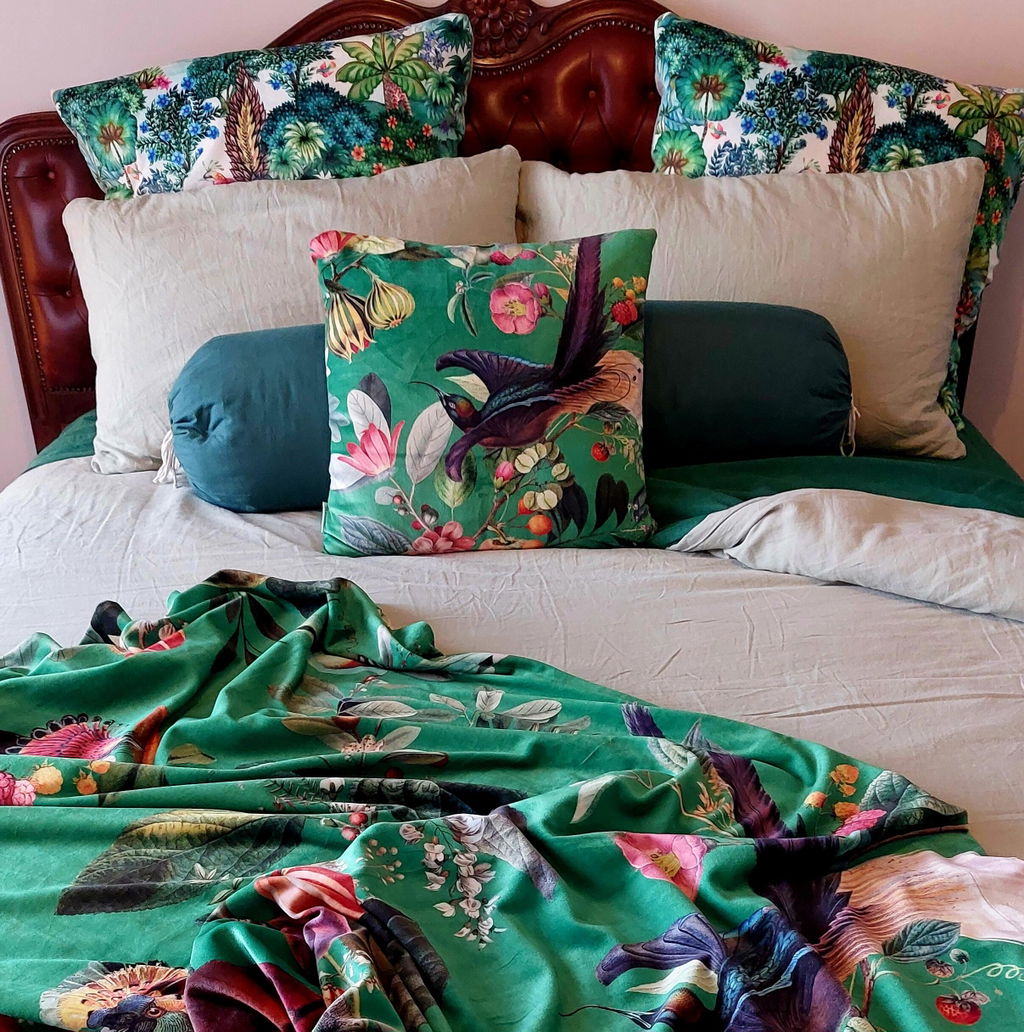
Pure Linen Quilt Cover Set in Flax. 100% French flax linen that softens with every wash and lasts years longer than synthetic alternatives. Shop Pure Linen →
Stonewashed cotton takes a different approach. The pre-washing process relaxes the fibres before the product reaches you, which means the softness is there from the first night rather than requiring a break-in period. It breathes significantly better than synthetic alternatives, handles regular washing well, and maintains its texture over years of use. For people who find linen's initial texture unfamiliar, stonewashed cotton is a natural starting point that still delivers meaningfully on durability and comfort.
Buying Less, Choosing Better
The idea of buying fewer things but choosing them more carefully has become more relevant across many areas of the home. Bedding is one of the clearest examples, because the economics are so straightforward once they're laid out.
The habit of buying cheap and replacing often feels economical at the point of purchase. It rarely is. A single quality linen set bought at a higher initial price, and used for eight to ten years, costs less per night than three or four synthetic sets covering the same period. And the experience across those years is qualitatively different.
This approach also simplifies the bedroom. Instead of managing multiple sets at different stages of wear, a smaller number of well-made pieces provides consistent comfort. There's no "the good set" and "the everyday set." Everything on the bed is worth being there.

Pure Linen. Hollow-fibre French flax that breathes, softens, and lasts. Shop Pure Linen →

Stonewashed Cotton. Pre-washed softness from night one, durability that lasts. Shop Stonewashed Cotton →
Quiet Signals of Quality
Status has traditionally been communicated through visibility. Logos, recognisable finishes, and markers that signal value from across a room. That mode of expression is losing ground to something more understated.
Increasingly, quality is expressed through the experience of use rather than the signal of ownership. The feel of a fabric after repeated washing. The way a material drapes. The consistency of comfort over months and years. These things are perceptible to the person in contact with them every night, and that's exactly who they're chosen for.
Bedding is a direct example of this shift. High-quality natural fibres don't announce themselves. They're not immediately legible from a distance. But they feel different to sleep on, and they feel progressively better the longer they're used. This is a form of quality that rewards attention rather than demanding it — and that kind of confidence has become its own status signal.
What to Look For When Choosing Sustainable Bedding
Fibre type over thread count. Thread count is a marketing metric that tells you very little about how a fabric will perform or age. What matters is the length and quality of the fibre itself. Long-staple flax linen and pre-washed long-staple cotton both age well. Short-staple fibres, regardless of thread count, do not.
Natural over synthetic, without exception. Polyester and microfibre blends are inexpensive upfront but trap heat, pill within the first year, and reduce breathability progressively over time. If the fabric includes synthetic content, it will underperform natural alternatives on every metric that matters to sleep quality.
Consider how the fabric ages, not just how it feels new. The best indicator of quality is what a fabric does under repeated washing and daily use. Linen softens and improves. Pre-washed cotton maintains its texture. Synthetic blends decline. A fabric that gets better with use is worth more over its full lifespan than one that peaks on the first night.
Look for honest product descriptions. Brands that are specific about their materials, fibre origins, and weave construction tend to stand behind their products. Vague claims about softness or luxury without material detail are a reliable indicator that the detail doesn't support the claim.
Think in cost-per-use, not cost-per-purchase. A quality linen set used nightly for eight years costs a fraction of a cent per use. Four synthetic sets covering the same period cost more in total and provide a progressively worse experience. The upfront price of quality is the smaller number in this calculation.
Elegance Through Restraint
There is a certain quality to a bedroom that feels complete without feeling assembled. Where nothing is competing for attention, and where the materials themselves carry the weight of the space. This is harder to achieve with decoration than with selection — with fewer, better things rather than more coordinated ones.
Sustainable bedding supports this approach because it focuses on material quality rather than visual layering. When the fabric itself carries comfort and character, the space doesn't need to be supplemented with additional texture or decoration. The bed becomes the centre of the room by doing its job well, not by being styled.

Pure Linen in Ivory White. A bed that feels complete without embellishment — because the material earns its place. Shop Pure Linen →
A More Thoughtful Way to Live
The shift toward sustainable bedding reflects something broader. A growing awareness that the things we use every day — rather than the things we display occasionally — are where quality has the most direct impact on how life feels. The bedroom is the clearest example of this, because it's used more than any other room and seen by fewer people than almost any other room. The choices made there are made for comfort, not for an audience.
Choosing materials that last, breathe well, and improve with use becomes a way of aligning everyday experience with longer-term values. Not as a statement, but as a quietly better way of doing something you do regardless.
Status, in this context, is no longer what's most visible. It's what was chosen most carefully, and what's lived with most comfortably over time.
If you're ready to replace the cycle of buying and replacing with something that lasts, explore the Pure Linen range for maximum breathability and longevity, or the Stonewashed Cotton range for immediate softness with the same commitment to durability. Both are designed to get better rather than wear out.