Linen has been part of the bedroom conversation for years, but how it's being used is changing. It's moved well beyond its association with coastal homes and minimalist interiors. In 2026, designers are reaching for it across a broader range of spaces and using it with more intention — not just as a fabric choice, but as a way to establish mood, texture, and atmosphere from the ground up.
The change reflects something wider happening in how bedrooms are being designed. The emphasis has shifted from visual perfection to how a space actually feels to inhabit. Materials are being selected for their behaviour over time — how they soften, how they respond to light, how they hold up through daily use. In that context, linen has become the fabric that answers almost every question a designer is now asking.
Here's what's actually changing, and why linen is at the centre of it.
The Move Away From Overly Styled Spaces
The most significant shift in bedroom design over the past few years is the rejection of rooms that look like they've been arranged for a photograph. Designers are creating spaces that feel inhabited from the moment you walk in — where the bed looks like someone sleeps there, not like it's been set up for a shoot.
Linen is a natural fit for this direction. Unlike fabrics engineered for a smooth, consistent finish, linen carries inherent surface variation. It catches light differently at different angles. It folds with a relaxed weight that synthetic blends simply don't produce. The bed feels layered and considered without requiring additional cushions or accessories to read that way.
Designers often talk about wanting materials that "do the work." Linen is one of the few bedding fabrics that genuinely does — introducing texture, warmth, and visual depth without any additional effort from the person styling the room.

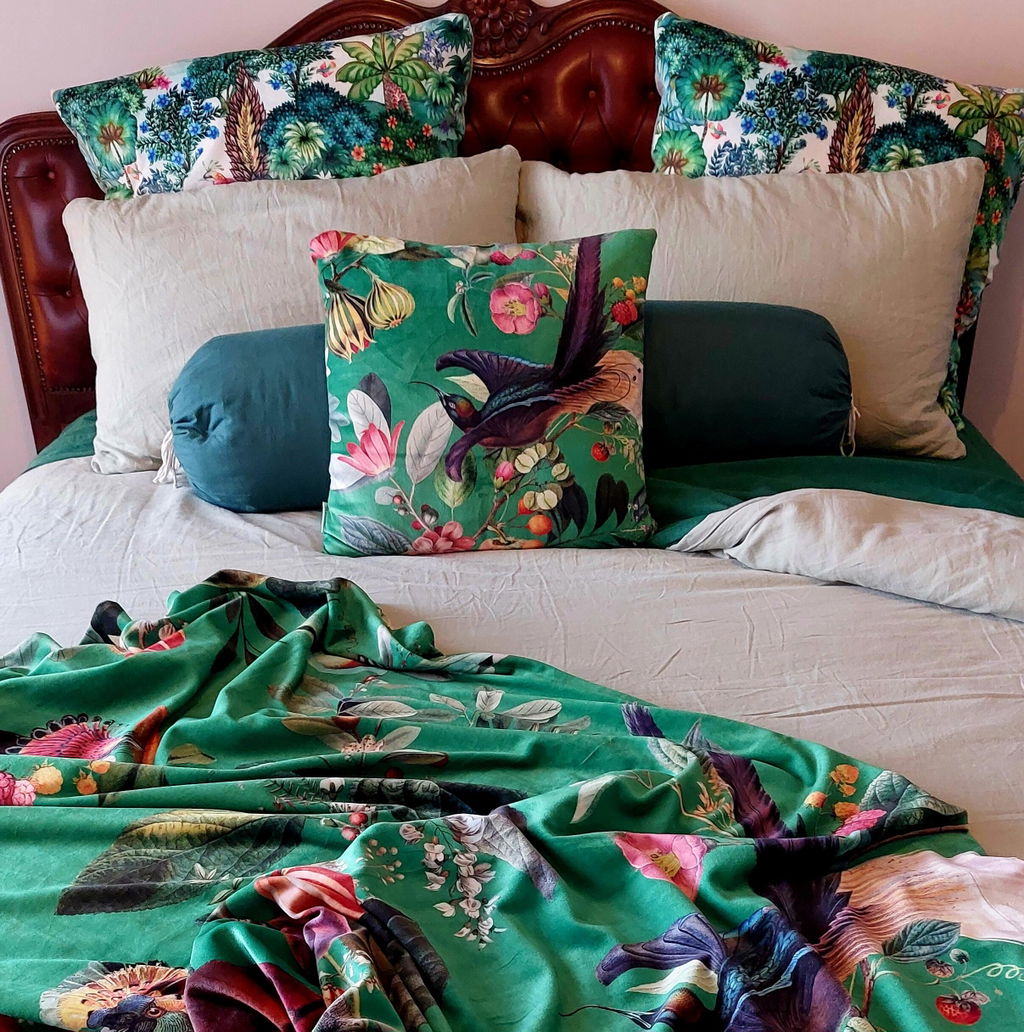
Pure Linen in Flax. Natural surface variation and relaxed drape — the bed looks considered without being arranged. Shop Pure Linen →
Tonal Layering Over Contrast
Neutral palettes remain dominant in bedroom design, but the approach to them has matured. The trend is no longer toward a single flat neutral repeated across every surface. Designers are working with tonal variation — building depth through subtle shifts in shade rather than relying on contrast or bold accents to create visual interest.
Linen is particularly well suited to this. Its texture allows colours that would appear nearly identical on a smooth surface to read as distinctly different. A warm flax paired with a slightly deeper taupe, or an ivory white layered with a soft sage — these combinations work on linen in a way they don't on percale or microfibre, because the surface itself adds dimension to the colour.
The result is beds that feel warm, considered, and genuinely comfortable-looking without any single element demanding attention. The depth comes from the relationship between layers, not from contrast with a statement piece.
Why designers keep coming back to linen
7–10+ years
How long quality linen remains in active use — improving in texture and drape throughout, rather than wearing out
Year-round
Linen's breathable structure performs in all seasons — no need to swap bedding between summer and winter
Fewer elements
Designers using linen consistently report needing fewer decorative additions — the fabric carries the visual weight on its own
Letting Fabric Replace Decoration
One of the clearest changes in how designers are approaching bedrooms is the reduction of decorative elements. The direction is toward fewer things, not more — and allowing materials to carry the visual weight that used to be distributed across cushions, throws, trays, and accessories.
Linen makes this possible in a way that smoother fabrics can't, because it has enough inherent character to hold a room without support. The surface variation, the natural drape, the way it catches light at different times of day — these qualities mean the bed doesn't need to be supplemented. A well-made linen bed, styled simply, often reads as more considered than one layered with additional elements.
This is a practical change as much as an aesthetic one. Rooms with fewer objects are easier to live in, easier to maintain, and tend to feel more genuinely restful. Linen allows that simplicity without the bed looking sparse or unfinished.

Pure Linen in Warm Taupe. The fabric holds the room without supplementary decoration. Shop Pure Linen →
How Designers Are Layering Linen With Cotton
Where linen is being combined with other materials, the pairing of choice in 2026 is stonewashed cotton. The combination works because the two fabrics occupy different textural registers while sharing a natural, relaxed character.
Linen has more surface variation and a slightly more structured drape. Stonewashed cotton is smoother and softer from the first wash, with a more relaxed weight. Together they create the kind of tonal layering that designers are working toward — depth without contrast, warmth without heaviness.
The most common approach is linen as the quilt cover paired with stonewashed cotton sheets and pillowcases, or the reverse — cotton as the foundation with linen layered over the top. Either way, the palette stays consistent while the texture shifts between layers, which is exactly the effect designers are trying to achieve.

Pure Linen in Flax. Structured surface variation and natural drape. Shop Pure Linen →

Stonewashed Cotton in Blush. Softer texture, same natural character — pairs well with linen as a layering base. Shop Stonewashed Cotton →
Year-Round Versatility
Designers are increasingly selecting materials that can remain in place across seasons rather than being rotated in and out. This is partly a practical consideration — constant replacement is time-consuming and expensive — but it's also an aesthetic one. A bedroom that changes character significantly between summer and winter requires more ongoing maintenance than most people want to commit to.
Linen's breathable structure makes it genuinely functional year-round in a way that most bedding fabrics aren't. In warmer months, the open weave allows heat to escape and moisture to be wicked away from the body efficiently. As temperatures drop, the same properties that prevent overheating in summer allow warmth to build gradually rather than being trapped. The bed stays comfortable without needing to be fundamentally changed.
In practice, this means the core linen elements — quilt cover, pillowcases, fitted sheets — can stay in place through the year. Seasonal adjustment happens through layering: an additional blanket or throw in cooler months, removed as the weather warms. The foundation stays consistent.
Start with a linen quilt cover in a warm neutral. Flax, Warm Taupe, and Ivory White all work as a foundation. These tones layer easily with other colours and don't compete with the rest of the room.
Pair with stonewashed cotton in a complementary tone. Blush with Flax, Slate with Ivory White, or matching tones in different textures — the contrast is tactile rather than visual.
Add one throw at the foot of the bed for winter. A single folded throw in a slightly deeper or contrasting texture introduces warmth without adding visual noise. Remove it in summer — the core layers stay.
Resist the urge to add more. Linen beds styled with restraint consistently look more considered than those with additional cushions and accessories. The fabric does the work. Let it.
The Longevity Principle
Beyond aesthetics, there's a practical reason linen has become the fabric of choice for designers working with clients who are thinking long-term. It's one of the few bedding materials that genuinely improves with use rather than declining.
Most fabrics peak at or near purchase and deteriorate from there. Linen does the opposite. The fibres soften progressively through washing and use, developing a relaxed, supple quality that new linen doesn't have. A linen set that's been used and washed for two years looks and feels better than one that's just been opened. After five years, it's often the most comfortable thing in the room.
For designers, this matters because it changes the relationship between client and object. Instead of recommending something that will need replacing in a few years, linen becomes part of the bedroom's long-term fabric — something that evolves with the space rather than requiring periodic updating.

Pure Linen in Terracotta. Richer in colour, same natural texture and longevity. Shop Pure Linen →
What This Means If You're Styling Your Own Bedroom
The principles designers are working with translate directly to how anyone might approach a bedroom. You don't need a large budget or a full redesign. The shift is more about the starting point — choosing materials first, then letting the space develop around them.
Linen as the foundation means the bed already has texture, character, and depth before anything else is added. The decisions that follow — what colour, what additional layers, how much or how little to supplement — all become easier because the most important element is already doing its job.
The bedroom that results from this approach tends to feel quieter and more restful than one built through decoration. It doesn't need to be arranged precisely or updated seasonally. It improves on its own, becomes more familiar with time, and continues to feel right long after the initial choices were made.
That's what designers are working toward in 2026. And it's available to anyone willing to start with the right material.
Explore the Pure Linen range for the foundation designers keep reaching for — available in Flax, Warm Taupe, Ivory White, Terracotta, Sage, and more. Or start with the Stonewashed Cotton range for a softer entry point that layers naturally with linen as your collection grows.