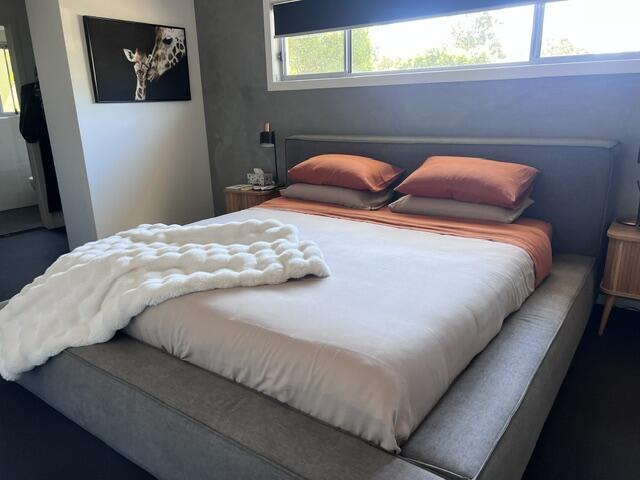
Walk into any bedroom and the bed is the first thing you notice. Not just because it fills the room, but because it says something. The colour, the texture, whether it's made in the morning or left in a comfortable tangle, these are choices most of us make on instinct. But they're rarely accidental. They reflect what we actually need from sleep, even when we haven't put it into words yet.
Bedding is one of the most intimate purchases we make and also one of the least scrutinised. We spend around a third of our lives in contact with it, yet most people replace it because it's worn out rather than because they've chosen something better. Which means a lot of people are sleeping on bedding that's not really working for them, and not quite knowing why rest feels harder than it should.
Understanding what draws you to particular fabrics, colours, and textures can be genuinely useful. Not as a personality quiz, but as a practical lens for understanding what your body and mind are looking for at the end of the day. When your bedding aligns with your sleep priorities, the bed becomes a more reliable place. Sleep starts to feel less like something you're trying to get, and more like somewhere you actually want to go.
Here's a guide to the main sleep personalities we see reflected in bedding choices, what they reveal about rest priorities, and how to choose with more intention.
The Comfort-First Sleeper
Sleep Profile: Prioritises immediate softness and familiarity over everything else. The bed is a place to fall into, not to prepare for. Texture is everything, and the best bedding is the kind that already feels like it's been slept in a thousand times. How it feels against the skin on the first night is what matters most.
For this sleeper, the transition into bed is meant to be effortless. There's no interest in a fabric that needs breaking in, or a texture that takes time to appreciate. The comfort that's wanted is the kind that's immediate, familiar, and uncomplicated.
This isn't a superficial preference. It reflects a genuine need for the bed to function as a reset space, somewhere that requires nothing of you the moment you get in. When the day has been demanding, the last thing you want is bedding that still has an opinion about you. You want it to feel like the problem is already solved.
Stonewashed cotton is the natural fit here. The stonewashing process mechanically relaxes the cotton fibres before they ever touch your bed, which means the softness you feel on the first night is a preview of what it will always feel like, not a promise of what it might become after twelve washes. There's no stiff phase to get through. It arrives already settled.
Our Stonewashed Cotton range in Blush offers that quality alongside a colour that's warm without being loud. It layers well, sits beautifully in natural light, and creates the kind of easy, inviting bed that makes you want to get back into it. Slate gives the same softness with a cooler, more neutral tone if you prefer your palette quieter.

Washed Cotton Quilt Cover in Blush, 3/4 angle. Pre-washed for immediate softness. Available in Blush, Slate, White, Sage, and more. Shop Washed Cotton Quilt Cover →
The Breathable, Temperature-Conscious Sleeper
Sleep Profile: Notices how bedding behaves through the night, not just at the start of it. Comfort means balance, not just softness. The priority is staying comfortable across changing temperatures and through different seasons. This sleeper notices when fabrics trap heat or feel heavy, and they wake slightly warmer than they'd like. They're looking for bedding that works with their body rather than around it.
If you've ever found yourself pushing off the duvet at 3am or switching sides of the pillow for a cooler surface, you're a temperature-conscious sleeper. The issue isn't that you can't sleep. It's that your bedding isn't quite doing its job.
Sleep researchers have long established that core body temperature plays a central role in sleep quality. During deep sleep stages, the body's internal temperature drops by one to two degrees. Bedding that allows heat to escape supports this process. Bedding that traps it works against it, leading to lighter, more fragmented sleep, even when the total hours look adequate on paper.
Linen addresses this directly. The natural hollow structure of linen fibres creates consistent airflow between the fabric and the skin. Heat escapes rather than builds. Moisture wicks away rather than sitting. The result is a fabric that stays in a comfort zone across a wider range of temperatures than most alternatives, which is why it performs well year-round rather than just in summer.
Linen also has a distinct feel that temperature-conscious sleepers often come to love precisely because it doesn't feel heavy. It's not the kind of fabric you burrow under. It's the kind you sleep within. That distinction matters at 2am when you're not consciously thinking about it, but your body is responding to it all the same.
Our Pure Linen range in Flax brings this in a natural, grounded tone that suits most bedroom palettes. If you've been sleeping warm or waking mid-night more than you'd like, starting with the quilt cover is an easy way to test whether breathability makes a difference for you.

Pure Linen Quilt Cover Set in Flax. Naturally breathable, temperature-regulating, and gets better with every wash. Shop Pure Linen Quilt Cover Set →
Temperature and Sleep: What the Research Says
16–20°C
The ideal bedroom temperature range for most adults, according to sleep researchers
1–2°C
The drop in core body temperature that occurs during deep sleep. Bedding should support, not resist, this shift
30%
More moisture-wicking capacity in linen versus standard cotton, helping regulate temperature through the night
The Calm, Minimal Sleeper
Sleep Profile: Uses the bedroom as a deliberate antidote to a noisy, busy day. The bedroom is kept intentionally quiet. Colour is restrained, surfaces are clear, and the space is designed to reduce stimulation rather than add to it. Bedding choices reflect this: natural tones, simple styling, and fabrics that add quiet depth without demanding attention.
For this sleeper, the bedroom is doing active work. It's a counterweight to the density of the day, and it only functions that way if it's kept clear and calm. Introducing busy patterns, bright colours, or visually complex styling into this space would undermine the whole point of it.
Research on pre-sleep cognitive arousal, the tendency for the mind to keep working when you're trying to rest, consistently shows that visual environments influence how quickly the brain begins to shift gears. A bedroom with clean lines, neutral tones, and minimal clutter provides fewer inputs to process, which means less time for the brain to spend cataloguing its surroundings before it can let go.
Natural fibres in undyed or lightly toned colours fit this approach particularly well. Linen in natural tones like Flax, or stonewashed cotton in muted shades like Sage or Slate, creates the kind of bed that looks effortlessly settled. Not styled, but at ease.
The texture of linen is worth noting here specifically. It adds visual depth without introducing pattern or contrast. It looks considered without looking decorated. For a bedroom built on restraint, that's a meaningful quality. The bed becomes a visual anchor in the space, something that draws the eye and then lets it rest.
Styling for this sleeper is typically simple: a single quilt cover, matching pillowcases, and a flat sheet in complementary tones. No stacking, no decorative cushions, nothing that needs removing before you can get in. The goal is a bed that's as easy to get into as it is to look at.
The Expressive, Mood-Led Sleeper
Sleep Profile: Shapes the bedroom by atmosphere and feeling rather than by function alone. The bedroom is part of a broader aesthetic, and bedding is one of the ways that aesthetic gets expressed. Colour and texture matter beyond their practical function. This sleeper is drawn to warmth, depth, and a sense of enclosure. The bed is meant to feel like something.
Not all bedrooms are designed to disappear. For some people, the bedroom is the most personal room in the house, and it shows. Bedding becomes a way of shaping mood rather than just managing it. Deeper colours, richer textures, and carefully considered layering all contribute to a space that feels intentional and enveloping.
Colour psychology in the sleep context is genuinely worth understanding here. Warmer tones, terracotta, ochre, dusty rose, tend to create a sense of enclosure and comfort that can make a room feel easier to settle into. Cooler, deeper shades, forest green, slate, navy, can bring a sense of retreat and privacy that some people find deeply conducive to sleep. What matters is that the response is real and personal, not just aesthetic.
For this type of sleeper, stonewashed cotton is often the preferred fabric because of how it carries colour. The pre-washed finish gives colours a slightly muted, lived-in quality that feels rich without being saturated. In Slate, the fabric adds depth without heaviness. The result is a bedroom that looks and feels considered, but still relaxed.
Linen works beautifully in this context too, particularly in deeper or more unusual tones. Its natural texture means colours take on a different quality than they do on smooth cotton: slightly more complex, with subtle tonal variation that reads as intentional even when it isn't. For a bedroom built around atmosphere, that's a quality worth working with.
When Sleep Priorities Shift
Bedding preferences aren't fixed. They shift with life. A move, a change in season, a new relationship, a health change, a period of poor sleep: any of these can alter what your body is looking for at night. What felt comfortable in one chapter of life may not feel right in another, and that's worth paying attention to rather than dismissing.
One of the most common transitions is from prioritising softness to prioritising breathability. This often happens as people become more aware of their sleep quality rather than just their sleep duration, noticing that they wake feeling less rested than the number of hours would suggest. Switching to a more breathable fabric frequently makes a measurable difference here, because the disruptions happening mid-night were temperature-related rather than structural.
Another common shift is toward simplicity. People who previously enjoyed expressive, layered bedrooms often find themselves drawn to quieter choices as life gets busier. The bedroom becomes a deliberate refuge rather than an extension of personal style, and the bedding changes to match. This isn't a regression. It's a response to genuine need.

Pure Linen texture close-up. The natural weave adds quiet depth and improves with time rather than wearing out. Shop Pure Linen Quilt Cover Set →

Washed Cotton close-up 3/4 detail in Blush. Pre-washed for a relaxed, easy feel from the very first night. Shop Washed Cotton Quilt Cover →
Seasonal changes also drive preferences in ways that are worth adapting to rather than resisting. What works beautifully through winter may not be the right choice for a humid February night, and vice versa. Treating bedding as a variable rather than a permanent fixture allows the sleep environment to stay responsive.
Our Pure Linen range and Stonewashed Cotton range are designed to sit at different points on the comfort spectrum, so it's easy to shift between them as priorities evolve. Linen for breathability and temperature regulation, year-round for warm sleepers or seasonally for others. Stonewashed cotton for immediate softness and that relaxed, pre-worn feel. Both fabrics are designed to last and to improve over time rather than degrade quickly.
How to Read Your Bedding Choices
If you want a simple framework for reflecting on what your current bedding is, or isn't, doing for your sleep, these are the right questions to ask:
Do you wake during the night feeling warm? Your bedding may not be breathable enough. Linen or a lower fill-weight duvet inner might help significantly.
Does getting into bed feel slightly disappointing? This is usually a texture issue. Fabrics that feel stiff, rough, or synthetic against the skin don't provide the sensory comfort the body is looking for. Pre-washed cotton or well-washed linen both resolve this quickly.
Does the bedroom feel noisy or stimulating when you're trying to rest? Colour and clutter are worth looking at. Neutral tones, clear surfaces, and bedding that reads as calm rather than decorative can make a meaningful difference to how quickly the brain begins to wind down.
Does the bed feel like somewhere you want to go, or somewhere you end up? This is the overall test. A bed that genuinely invites rest changes the relationship you have with sleep. It becomes somewhere you're drawn to rather than a place you eventually collapse into.
Find Your Fabric: Quick Reference Guide
| Sleep Priority | Best Fabric | Recommended Colourway |
|---|---|---|
| Immediate softness and comfort | Stonewashed Cotton | Blush, Slate, Sage |
| Temperature regulation and breathability | Pure Linen | Flax, Ivory White |
| Calm, minimal environment | Pure Linen or Stonewashed Cotton | Flax, Slate, Sage, Natural |
| Expressive, mood-driven bedroom | Stonewashed Cotton for colour depth; Linen for texture | Slate, deeper linen tones |
| Hot sleepers / warm climate | Pure Linen | Any tone. Linen breathes regardless of colourway |
| New to natural bedding | Stonewashed Cotton | Blush or White to start |
Choosing with Intention
Most bedding decisions happen reactively: something wears out, something goes on sale, something looks nice in a photo. There's nothing wrong with that. But there's something genuinely useful about approaching your sleep environment with a bit more intention, even once.
When you understand what your body is actually looking for at night, and choose materials that support that rather than work against it, the difference is noticeable. Not in a dramatic, life-changing way. In the quieter way of waking up and feeling like sleep actually did its job.
Natural fibres, considered colours, and fabrics chosen for how they function rather than just how they photograph are the foundation of a sleep environment that works. The best bedding isn't the softest or the most beautiful in isolation. It's the bedding that your body recognises, settles into, and rests well within, night after night.
And when you find that, the difference is genuinely felt.
Explore the Pure Linen range for natural breathability and temperature regulation, or the Stonewashed Cotton range for immediate softness and a relaxed, pre-washed feel. Both are available in a range of tones designed to suit different sleep environments and personal aesthetics.